
Wire Types
Quality wire cloth begins with certified materials
High Carbon Steel Alloys:
High tensile crimping quality spring steel wire
Abrasion-resistant, hard drawn, built to withstand repeated impact from heavy objects.
Recommended for use when material to be screened is heavy and bulky, but moderately abrasive.
High Carbon wire has the least expensive initial cost.
Stainless Steel:
Abrasion and corrosion-resistant, high tensile, hard drawn wire
S304 Stainless
Standard alloy = 18% chrome / 8% nickel for excellent corrosion resistance.
S316 Stainless
Molybdenum is added to the basic 18% / 8% alloy for increased resistance to chemical corrosion.
S430 Stainless
Chromium alloy with no nickel for higher resistance to chemicals, atmospheric corrosion and oxidation. Handles temperatures up to 1,600 F.
Tufflex
Higher tensile strength, greater flexibility
Manufactured for abrasive and high-impact applications.
Alternative to oil tempered and High Carbon wire.
What is every producer looking for?
🗹 Less downtime from broken screens
🗹 Lower costs of production
🗹 Consistency in sizing
Tufflex meets all three requirements.
Choose Tufflex Wire and boost production for in-demand abrasive rock.
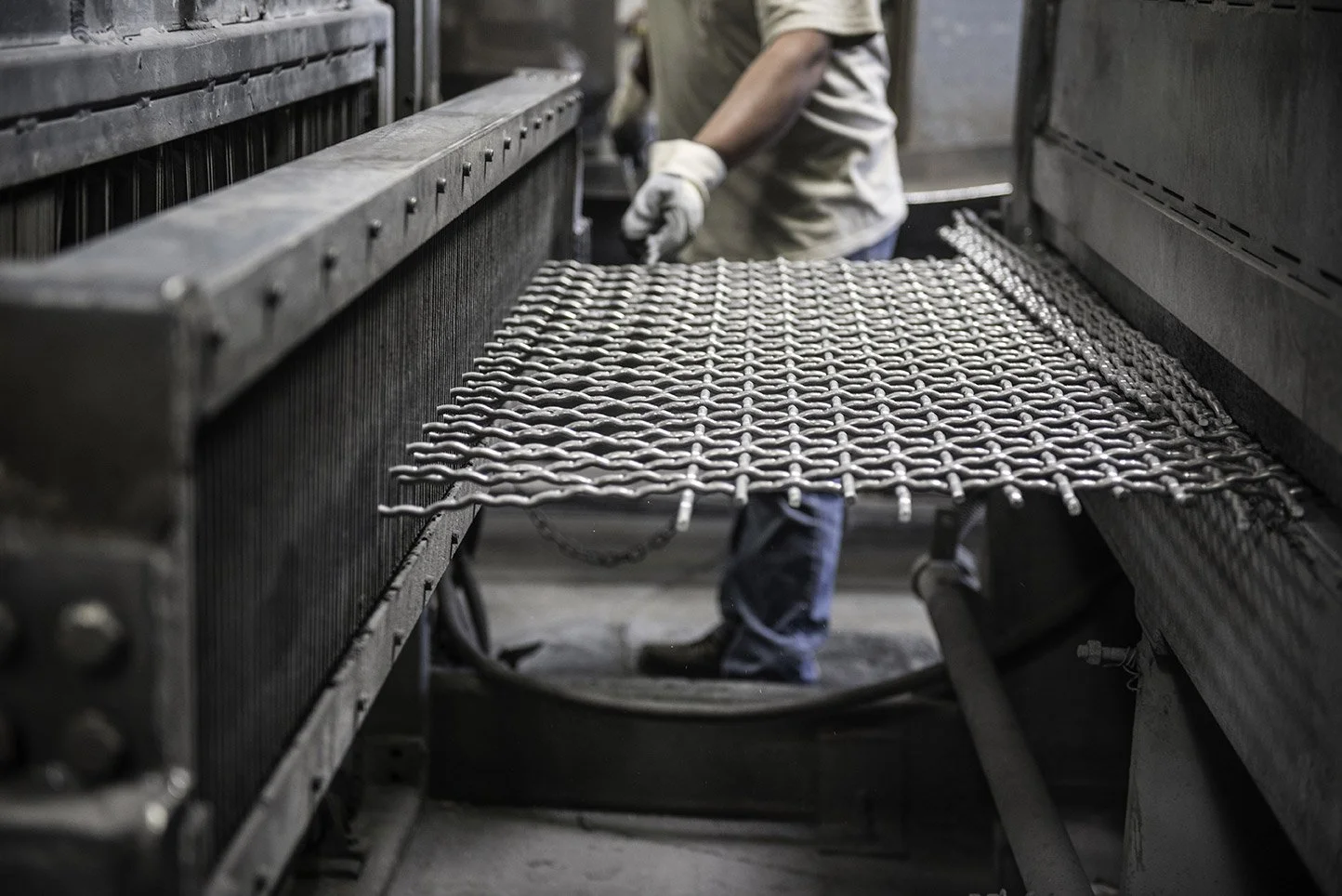
Tufflex wire is an excellent choice for an alternative to oil tempered and High Carbon wire. The difference is the chemical makeup and the manufacturing process. Even though the screen process itself has not changed much over the last 25 years, reducing downtime with Tufflex can be a game changer itself.
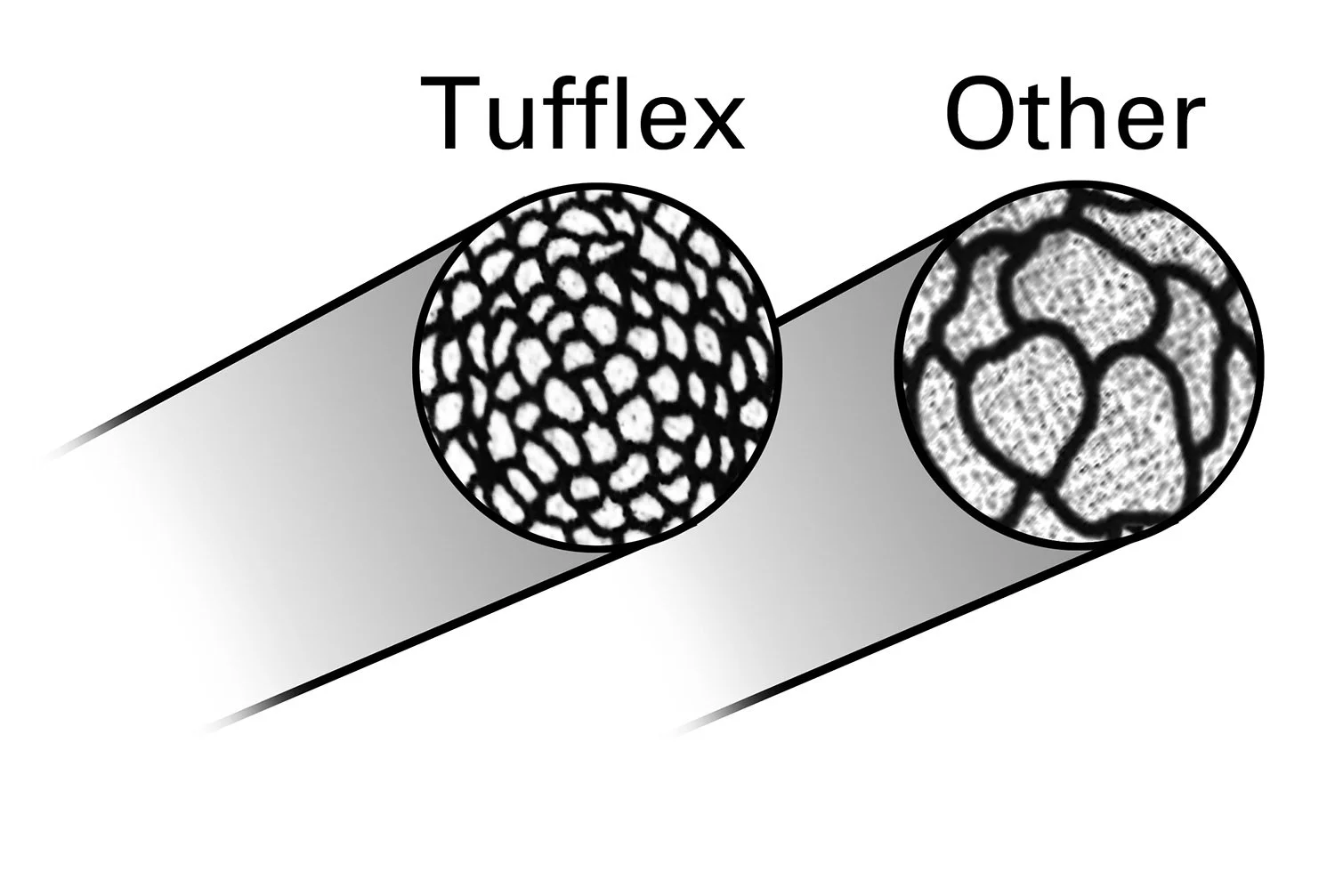
Two strength-building measures to create a higher tensile strength than a single-step process.
Finer grain structure decrease the surface rust and corrosion, less-susceptible to breakage with increased ductility
Greater consistency and flexibility throughout the wire
Lower per ton screening costs